
Herend and Zsolnay: Hungarian Porcelain and Ceramics
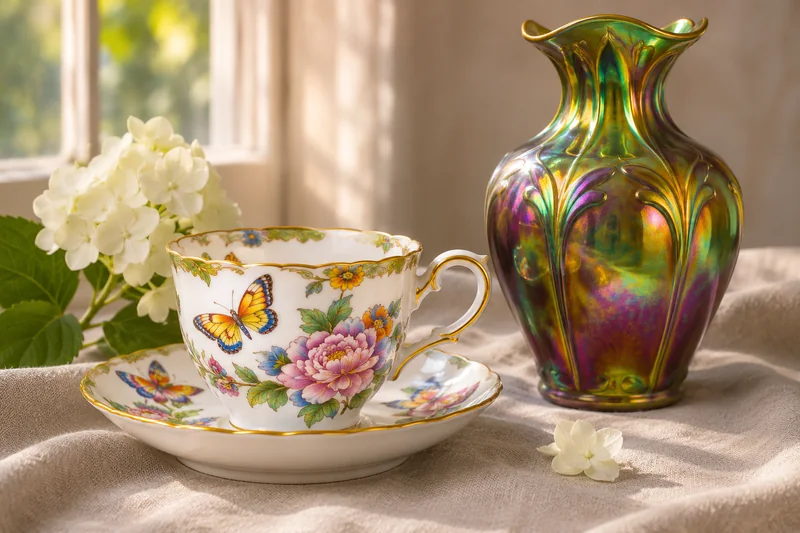
Few objects capture the elegance and artistic imagination of Hungary quite like fine porcelain and decorative ceramics.
Herend is known for hand-painted porcelain, from table services to small animal figurines. In Pécs, the Zsolnay factory became famous for lustrous decorative ceramics and for tiles and ornaments that became part of the buildings around them. I wanted to include both makers here because their work tells a part of Hungary’s story that deserves a closer look.
Two Hungarian names with lasting cultural importance
Herend began in 1826. Its reputation rose under Mór Fischer, who took over in 1839 and developed the workshop into a porcelain manufactory whose work reached an international audience in the nineteenth century. The Herend Porcelain Museum’s Fischer rooms trace the range of work made during this period.
The Zsolnay family enterprise began in Pécs in 1853. Under Vilmos Zsolnay, it grew from a workshop into a factory that made both decorative and architectural ceramics. The Museum of Applied Arts in Budapest documents the factory’s experiments with lustre glazes and the development of its architectural ceramic, pyrogranite, also called pyrogranit.
What makes Herend special?
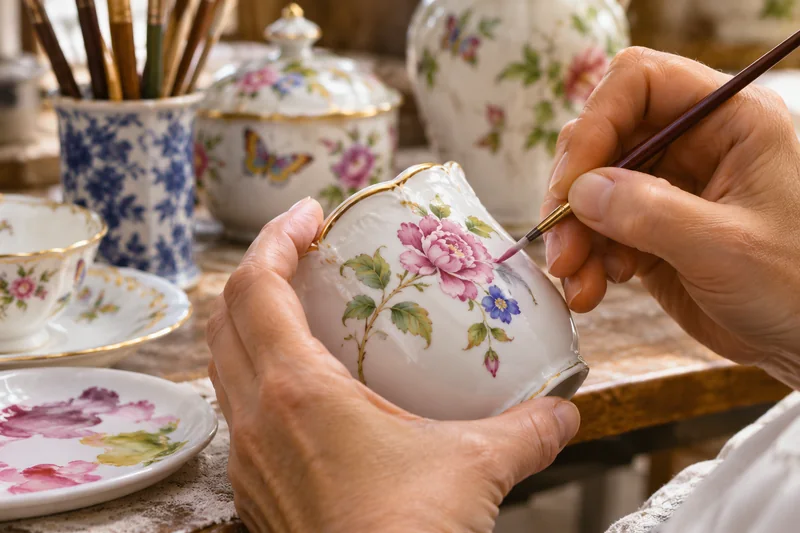
Herend’s painters work on white porcelain, using details such as fine brushwork and gilding to bring out the shape of a piece. On some pieces, openwork or a sculpted finial is as much a part of the design as the painted pattern. Herend’s account of its decorating techniques describes how a modelled detail such as a flower or bird can be attached to a piece before it is fired.
Among its best-known patterns, Victoria brings together butterflies and flowers, while Rothschild Bird places birds among branches and scattered natural details. Both can be seen in the manufactory’s pattern catalogue. Herend is also known for animal figurines, some painted with the closely spaced scales often called fishnet. Herend’s account of the fishnet design shows how the pattern follows the shape of a figurine.
A teacup, serving dish or figurine can bring a feeling of occasion to a table or shelf. The painted details also give you something to look at closely, even on a single small piece.
What makes Zsolnay so distinctive?
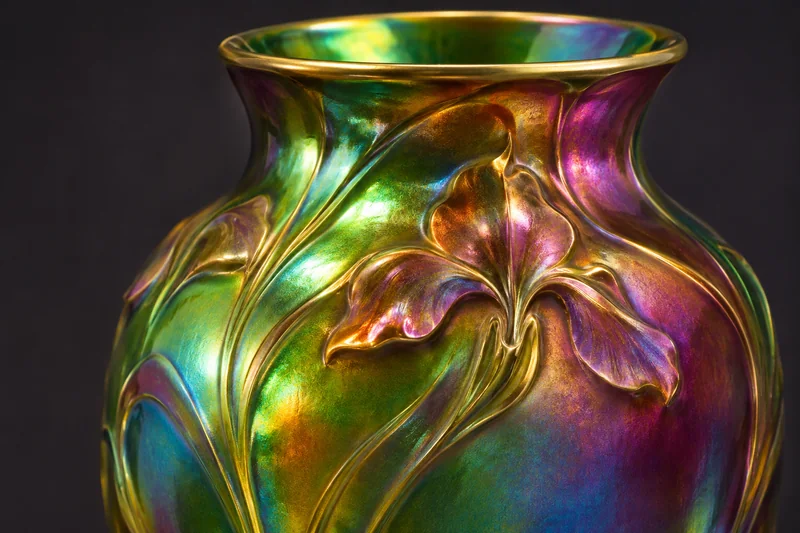
The name Zsolnay is closely tied to Pécs. Some of its most expressive vases and bowls date from the late nineteenth and early twentieth centuries, when the flowing lines and natural forms of Art Nouveau were finding their way into ceramics.
Eosin is the name associated with Zsolnay’s iridescent lustre finishes. Metallic greens, golds and purples may come into view as the light moves across a curved surface. The Metropolitan Museum of Art’s Zsolnay vase with handle shows how the sheen can pick out the curves of a plant design. The Museum of Applied Arts’ labrador eosin vase offers another example and records the marks on its base.
Beyond the display cabinet: Zsolnay in Hungarian architecture
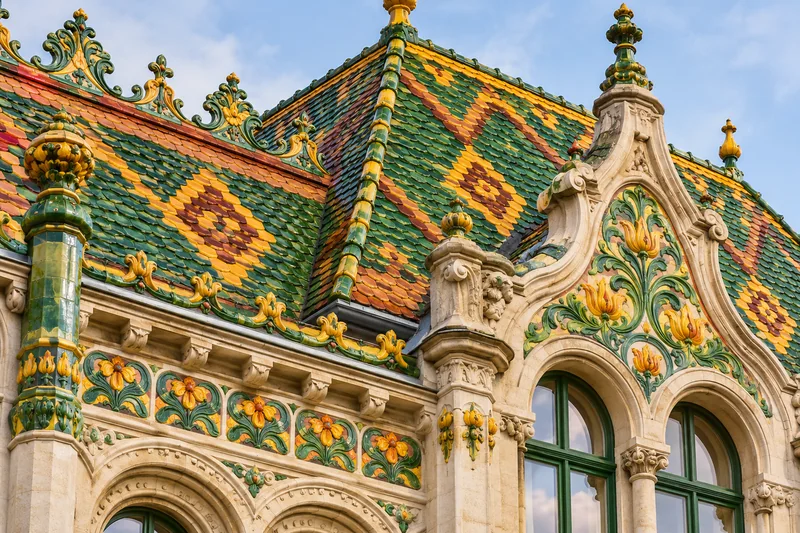
The factory’s frost-resistant pyrogranite allowed ceramic ornaments to be used outdoors. Roof tiles and façade details offered architects another way to work with colour and pattern.
In Budapest, the Museum of Applied Arts’ factory history identifies Zsolnay architectural ceramics on Matthias Church and on Ödön Lechner’s Museum of Applied Arts and former Hungarian Geological Institute. The Zsolnay manufactory’s history also identifies the Great Market Hall among the capital’s buildings decorated with its ceramics. These are places to look up as well as around you.
Herend and Zsolnay: how are they different?
If you are choosing a piece, start with what you want to do with it. A Herend cup and saucer lets you enjoy a painted pattern at the table. A Zsolnay eosin vase gives you a surface that changes with the light. Each factory made many kinds of objects, so let the particular piece guide your choice.
Why people still love them today
Both offer a tangible connection to Hungarian design. A Herend serving piece can mark a wedding or anniversary, and a figurine can be the beginning of a collection. A Zsolnay vase or small sculptural piece can be a thoughtful gift for someone who enjoys decorative art. A single piece is often enough to appreciate the work that went into it.
What to look for when buying Hungarian porcelain or ceramics
1. Decide what type of piece you want
For tableware, confirm whether the listing is for one piece, a cup and saucer, or a set. Check the dimensions and ask whether lids, stands or other parts shown in the photographs are included. For a display piece, measure the shelf as well as the object.
2. Think about your style
If a particular Herend pattern matters to you, compare the seller’s photographs with a maker reference. For eosin, ask for photos in ordinary daylight and from more than one angle. The colour of a single listing photograph can depend heavily on the lighting.
3. Look at craftsmanship, marks and condition
Ask for clear photographs of the base and every mark. On Herend, compare the factory mark with examples from the claimed period. Where present, check the shape number and decoration code against a reference. An 1843 Herend plate in the Museum of Applied Arts has an impressed mark and date, one example of how earlier markings can differ from a modern backstamp.
Some Zsolnay pieces bear a five-tower mark and a Zsolnay–Pécs inscription. The museum’s labrador eosin vase has those details as well as impressed numbers. Compare the mark, shape and finish together. A mark alone cannot authenticate a piece. Look closely at rims, handles, feet and lids, and ask the seller to identify chips, cracks, gilding wear and any restoration.
4. Consider display and use
For a cup or serving piece, check the maker’s care guidance for that item and confirm that an older or restored piece is suitable for your intended use. For a vase or figurine, consider where it will be steady and where natural light will let you see the surface.
5. Buy from a source you trust
Ask for written details about condition, repairs, provenance and returns. For an expensive or uncertain antique, seek an independent specialist opinion before buying. If you are beginning a collection, one well-documented piece is a good place to start.
Bringing Hungarian artistry into everyday life
A hand-painted cup can make an ordinary afternoon tea feel more special. An iridescent vase can bring colour to a quiet corner of a room. Part of the pleasure is finding a place for something you enjoy seeing, whether it is used on occasion or given a shelf of its own.
A lasting expression of Hungarian craftsmanship
The next time you see a painted saucer or a patterned roof in Hungary, take a moment to notice what the material and the decoration are doing together. It is a small way to see the work of these makers more clearly.
On MagyarImport, you can explore the guides to Herend Rothschild Bird porcelain, Zsolnay eosin decorative vases and Zsolnay lustre-glazed animal figurines. The guides include existing retailer searches for comparison. Check each seller’s photographs and description if you are looking for work by a particular factory. You can also browse Hungarian Folk Art & Crafts, Tableware & Drinkware and Collectibles & Keepsakes.