
The Rubik's Cube: Hungary's Puzzle That Conquered the World
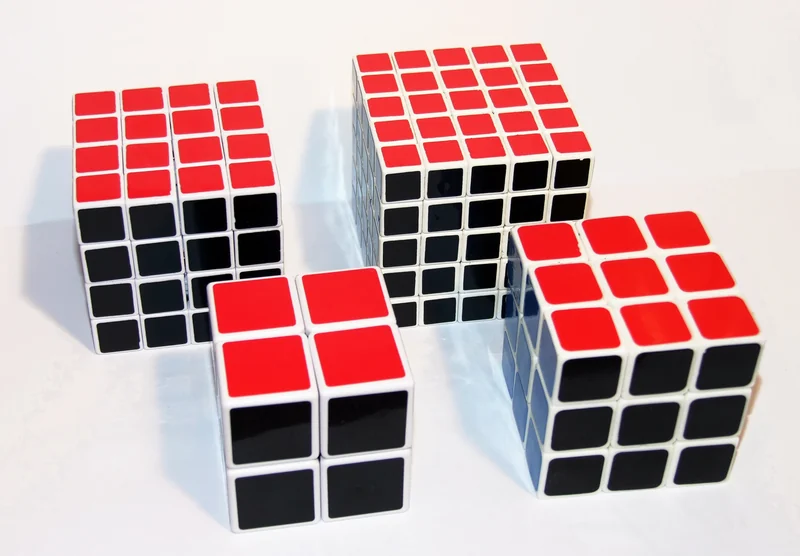
From a simple experiment in Budapest to a worldwide phenomenon, discover the remarkable story of Ernő Rubik's colourful invention—and why it continues to fascinate generations.
Few inventions are as instantly recognizable as the Rubik's Cube.
With its six colourful faces and seemingly endless combinations, this small mechanical puzzle has challenged, entertained and occasionally frustrated millions of people around the world.
But behind the familiar cube lies a fascinating Hungarian story.
What began as an experiment in three-dimensional movement became one of the most successful puzzles ever created, inspiring competitions, books, collectors and countless variations.
More than fifty years after its invention, the Rubik's Cube remains a wonderful example of how a simple idea can capture the world's imagination.
Ernő Rubik: The Man Behind the Cube
The story begins in Budapest with Ernő Rubik, a Hungarian architect, designer and educator born in 1944.
Rubik studied sculpture and architecture before becoming a teacher at Budapest's Academy of Applied Arts.
He was fascinated by geometry, spatial relationships and the ways objects could move in three dimensions.
In 1974, he developed a remarkable mechanical structure: a cube made of smaller interconnected pieces that could rotate independently without falling apart.
His early prototypes were constructed using simple materials, including wood.
The original challenge was not to create a bestselling toy. Rubik was exploring movement, structure and spatial relationships—ideas closely connected to his work as a designer and educator.
But once he began turning the cube's sections, an entirely new challenge emerged.
How could the scrambled pieces be returned to their original arrangement?
Rubik himself had to work out how to solve the puzzle he had invented.
From the Magic Cube to a Worldwide Sensation
The invention was originally known in Hungarian as the Bűvös Kocka, meaning Magic Cube.
Rubik applied for a Hungarian patent in 1975, and the puzzle began appearing in Hungarian shops in 1977.
At the time, Hungary was part of the Eastern Bloc, and bringing a new product to international markets was not straightforward.
The turning point came when the puzzle attracted the attention of people involved in the international toy industry.
Businessman Tom Kremer helped arrange a licensing agreement with Ideal Toy Corporation, opening the door to worldwide distribution.
In 1980, the Magic Cube was renamed the Rubik's Cube and introduced to international audiences.
Its popularity was extraordinary.
By the early 1980s, people around the world were twisting its colourful faces, sharing solving techniques and competing to see who could complete the puzzle fastest.
What began in a Budapest workshop had become a global sensation.
What Makes the Rubik's Cube So Fascinating?
At first glance, the classic Rubik's Cube appears wonderfully simple.
It has six faces, each divided into nine coloured squares. The goal is to twist the sections until every face displays a single colour.
Yet the puzzle is far more complex than it looks.
A standard 3×3 Rubik's Cube has more than 43 quintillion possible arrangements.
That's roughly 43 followed by 18 zeros.
Despite this extraordinary number, every reachable scrambled position can be solved in 20 moves or fewer when a half-turn is counted as one move.
For beginners, however, even solving a single face can feel like a major accomplishment.
Part of the cube's appeal is that it invites experimentation.
You can pick it up without reading instructions, turn a few sections and immediately understand the challenge.
Solving it requires a combination of observation, patience, practice and learned techniques.
And the satisfaction of finally seeing all six faces restored is difficult to forget.
From Childhood Toy to Competitive Sport
Although the original Rubik's Cube became famous during the 1980s, its popularity did not end with that decade.
Over time, enthusiasts developed increasingly sophisticated solving methods, and a worldwide community of dedicated puzzle solvers emerged.
Today, competitive cubing—often called speedcubing—brings together participants who attempt to solve puzzles as quickly as possible.
The first Rubik's Cube World Championship was held in Budapest in 1982.
Modern competitions are organized internationally, with events involving different puzzle sizes and solving challenges.
Some competitors can solve a standard cube in just a few seconds.
But speed is only one part of the appeal.
For many people, cubing is simply an enjoyable personal challenge, offering a sense of progress as they gradually improve.
More Than One Cube: A World of Puzzles
The classic 3×3 Rubik's Cube remains the most recognizable version, but it has inspired an entire family of puzzles.
Different designs offer new challenges, making them appealing to beginners, experienced solvers and collectors alike.
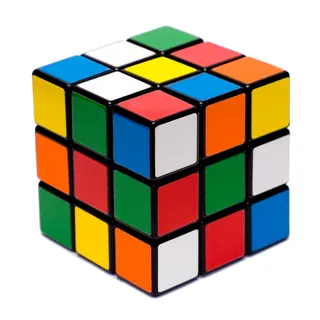
The Classic 3×3 Cube
The original design is an excellent introduction to mechanical puzzles.
Its familiar colours and satisfying turning mechanism have made it a favourite for generations.
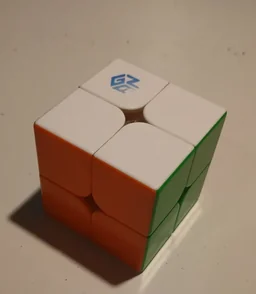
The 2×2 Cube
Smaller and simpler in appearance, the 2×2 Cube is a popular choice for younger puzzle enthusiasts and beginners.
Although it has fewer pieces, solving it still requires some thought and practice.
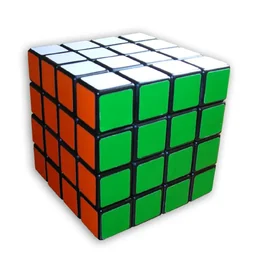
The 4×4 Cube
For those ready for a more advanced challenge, the 4×4 Cube introduces additional complexity.
With more movable pieces and no fixed centre pieces, it requires techniques beyond those used for the classic 3×3.
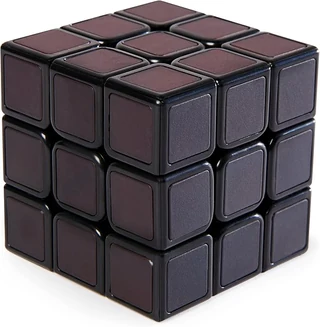
The Rubik's Phantom Cube
One of the more unusual variations, the Rubik's Phantom Cube adds a fascinating visual twist.
Its heat-sensitive surface initially appears dark, revealing the coloured squares when warmed by touch.
As the colours gradually fade again, solvers face an additional challenge: remembering what they have seen.
It's an intriguing example of how the original concept continues to inspire creative variations.
Other Twisty Puzzles
Beyond the familiar cube shape, puzzle enthusiasts can explore pyramids, irregularly shaped puzzles and other mechanical challenges.
Some are designed for speed, while others emphasize unusual movements, patterns or shapes.
Together, they offer an almost endless variety of possibilities for curious minds.
Books, Guides and the Joy of Learning
The Rubik's Cube has also inspired a remarkable collection of books and educational resources.
Solving guides introduce beginners to basic techniques, often using diagrams and step-by-step instructions.
More advanced books explore efficient solving methods, mathematical concepts and the fascinating geometry behind the puzzle.
For readers interested in the inventor himself, Ernő Rubik's book Cubed: The Puzzle of Us All offers a personal reflection on creativity, curiosity and the ideas behind his famous invention.
A solving guide paired with a classic cube can make a particularly thoughtful gift for someone who enjoys learning new skills.
And for readers who appreciate design, mathematics or the history of inventions, the story of the Rubik's Cube offers plenty to explore beyond the puzzle itself.
A Gift for Curious Minds
One reason the Rubik's Cube has remained popular is its broad appeal.
It isn't limited to one age group or level of experience.
For a child, a beginner-friendly cube can introduce the pleasure of solving a puzzle independently.
For a teenager, a faster-turning cube or a more challenging variation might become a rewarding hobby.
For adults, the classic cube can bring back memories of the 1980s or provide an enjoyable new challenge.
And for collectors, unusual designs and special editions offer something different.
Rubik's Cubes also pair naturally with puzzle books, solving guides and other brain teasers, making them versatile gifts for birthdays, holidays and special occasions.
The best choice depends on the recipient's interests and experience, but the underlying appeal is much the same: the invitation to discover something through play.
A Small Cube with a Remarkable Legacy
Few inventions have travelled as far from their origins as the Rubik's Cube.
Created in Hungary in 1974, it became a worldwide phenomenon, a recognizable symbol of creative thinking and an enduring part of popular culture.
Its design is celebrated not only by puzzle enthusiasts but also by museums and institutions interested in mathematics, engineering and industrial design.
Perhaps its greatest achievement is its simplicity.
The cube doesn't need batteries, a screen or an elaborate set of instructions to capture someone's attention.
It offers a challenge that can be explored at almost any age, one twist at a time.
And more than half a century after Ernő Rubik first began experimenting with his invention, people around the world are still discovering the satisfaction of solving it.
Further Reading
For those interested in learning more about Ernő Rubik, the history of his invention and the fascinating world of mechanical puzzles, these resources offer additional insights:
- Rubik's – The History of the Cube — Explore the official timeline of the Rubik's Cube, from its invention in 1974 to its worldwide success and later developments.
- Smithsonian Magazine – A Brief History of the Rubik's Cube — Discover the story behind the invention and how a Hungarian design experiment became a cultural phenomenon.
- Museum of Modern Art – Rubik's Cube — Learn why the Rubik's Cube is recognized as an important example of twentieth-century design.
- World Cube Association — Explore the international world of competitive cubing, including official competitions, results and records.