
Christmas in Hungary: Traditions, Flavours and Cherished Memories
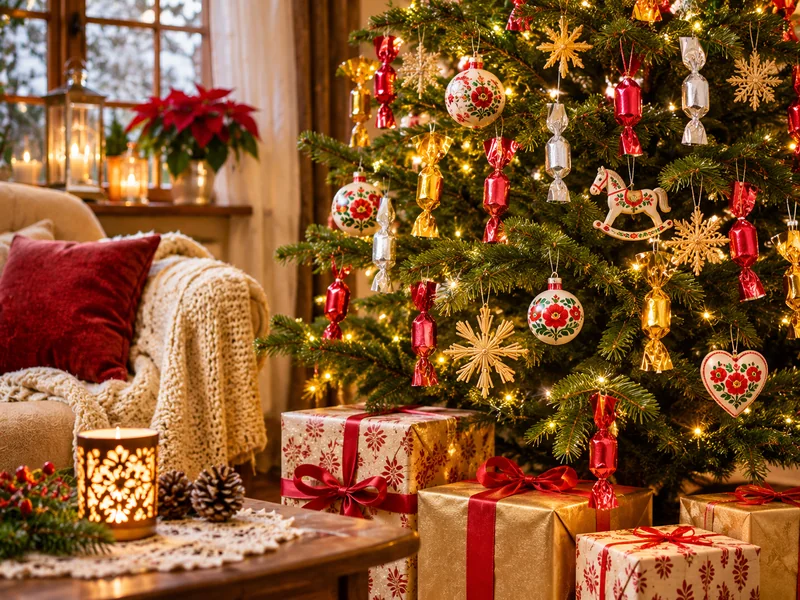
Discover the festive traditions, familiar flavours and little treasures that make a Hungarian Christmas so special.
Christmas in Hungary is a season filled with warmth, anticipation and cherished traditions. From the scent of freshly baked bejgli to the colourful wrappers of szaloncukor hanging on the Christmas tree, the holidays bring together generations through familiar customs and shared memories.
While some traditions have evolved over time, the heart of a Hungarian Christmas remains the same: family, togetherness and the joy of giving.
Advent: The Anticipation of Christmas
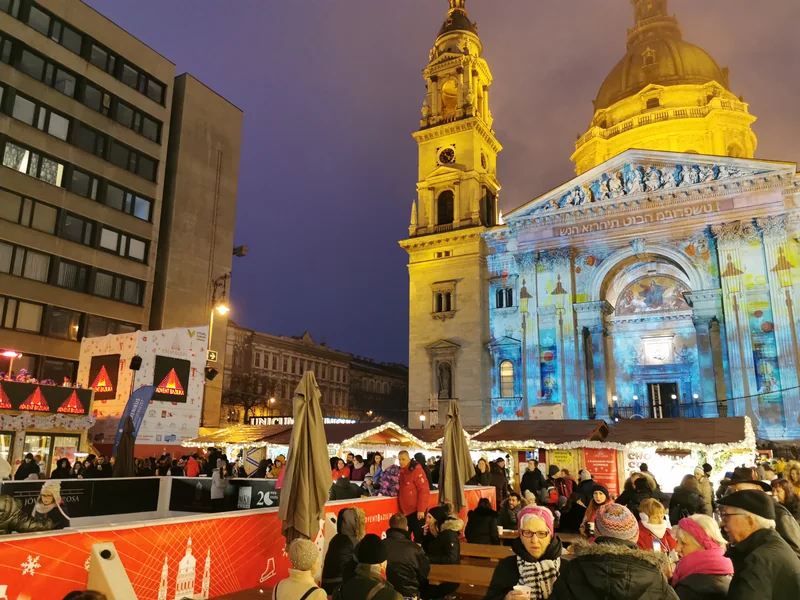
The festive season begins with Advent, marked by the four Sundays before Christmas.
Many Hungarian families display an Advent wreath (adventi koszorú) decorated with evergreen branches and four candles. Each Sunday, another candle is lit, marking the approaching celebration.
Across Hungary, towns and cities come alive with festive lights, Christmas markets and seasonal decorations.
Budapest is particularly enchanting during this time of year. The Christmas markets at Vörösmarty Square and in front of St. Stephen's Basilica offer handcrafted gifts, traditional foods, mulled wine and beautifully decorated stalls.
The scent of cinnamon, roasted chestnuts and freshly baked chimney cakes fills the winter air, creating a magical festive atmosphere.
Mikulás: A Special Day for Children
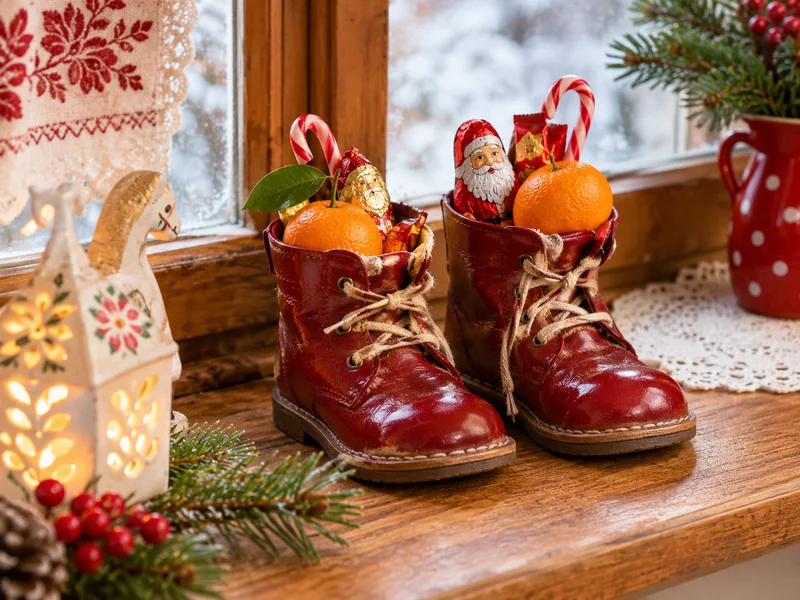
One of Hungary's most beloved December traditions takes place well before Christmas.
On the evening of December 5, children clean their boots and place them on the windowsill, hoping for a visit from Mikulás, the Hungarian St. Nicholas.
By the following morning, December 6, the boots may be filled with chocolates, sweets, mandarins and small surprises.
Traditionally, children who have misbehaved might also receive a virgács, a small bundle of twigs, usually given today as a playful reminder rather than a punishment.
Unlike Santa Claus in many English-speaking countries, Mikulás is associated primarily with St. Nicholas Day rather than Christmas Eve.
Szenteste: The Magic of Christmas Eve
In Hungary, the main family Christmas celebration traditionally takes place on December 24, known as Szenteste, or Holy Evening.
In many households, the Christmas tree is decorated on Christmas Eve itself. Traditionally, younger children are told that Jézuska, the Baby Jesus, brings the Christmas tree and presents.
The ringing of a small bell may announce that the tree is ready, inviting children into the room to discover its lights, decorations and gifts.
Families gather for a festive dinner, exchange presents and sometimes sing traditional Christmas songs such as Mennyből az angyal and Kis karácsony, nagy karácsony.
Some families also attend midnight Mass, while December 25 and 26 are often spent visiting relatives, enjoying festive meals and continuing the celebrations.
Szaloncukor: Hungary's Sweet Christmas Tradition
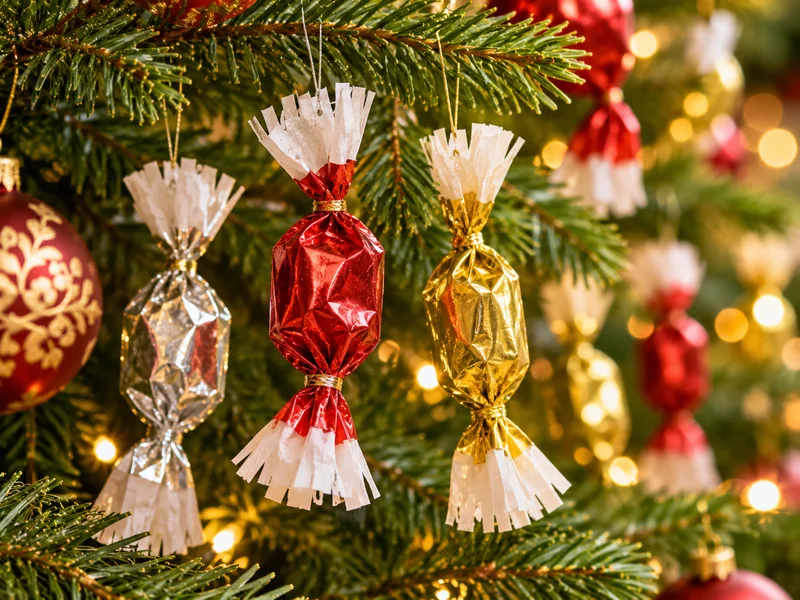
Few decorations are as distinctly Hungarian as szaloncukor.
These individually wrapped sweets, often covered in chocolate and enclosed in colourful, shiny wrappers, are a familiar sight on many Hungarian Christmas trees.
The tradition became popular in Hungary during the nineteenth century, and the name reflects the custom of displaying decorated Christmas trees in the home's salon or reception room.
Originally associated with fondant sweets, szaloncukor is now available in a wonderful variety of flavours, including:
- Chocolate and marzipan
- Coconut
- Fruit jelly
- Caramel
- Hazelnut
- Chestnut

The sweets are hung among the branches, adding colour and sparkle to the tree.
For many Hungarians, especially those living abroad, the sight of szaloncukor brings back fond childhood memories — including the familiar temptation to eat the chocolate and leave the empty wrapper hanging on the tree!
The Flavours of a Hungarian Christmas
Food plays a central role in Hungarian holiday celebrations. Although menus vary by region and family, several dishes have become closely associated with Christmas.
Halászlé — Hungarian Fisherman's Soup
This richly flavoured fish soup, prepared with freshwater fish, onions and paprika, is a traditional Christmas Eve dish in many Hungarian households.
Its vibrant red colour and distinctive flavour make it a memorable part of the festive table.
Töltött káposzta — Stuffed Cabbage
A hearty dish of cabbage leaves filled with meat and rice, often cooked with sauerkraut and served with sour cream.
Stuffed cabbage is particularly well suited to holiday gatherings, as it can be prepared in advance and often tastes even better the following day.
Bejgli — Walnut and Poppy Seed Rolls
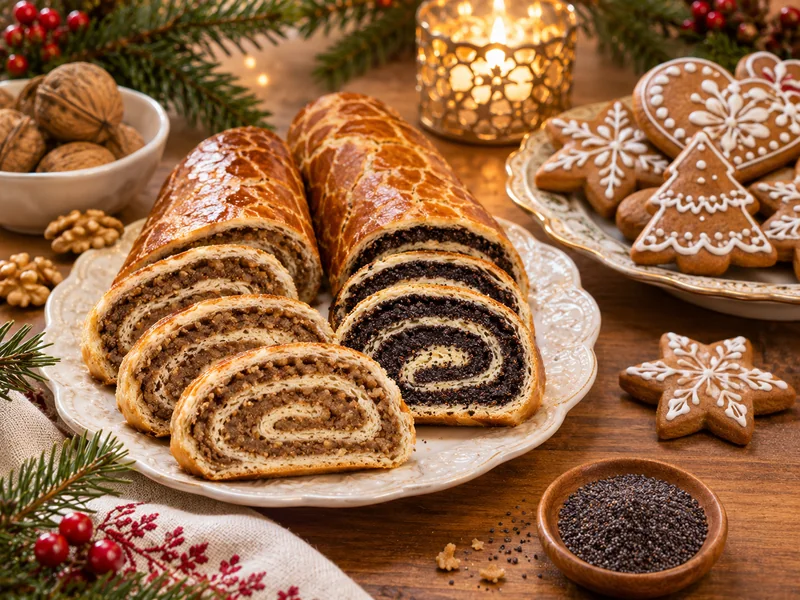
Perhaps the most iconic Hungarian Christmas pastry, bejgli is a rolled pastry traditionally filled with either ground walnuts (diós bejgli) or poppy seeds (mákos bejgli).
In some folk traditions, poppy seeds are associated with prosperity and abundance. In parts of Hungary, walnuts were also used in customs intended to protect the household.
For many families, Christmas simply would not feel complete without a beautifully sliced bejgli on the table.
Mézeskalács — Hungarian Gingerbread
Fragrant with honey and warm spices, Hungarian gingerbread cookies are often decorated with delicate white icing.
They can be enjoyed as festive treats, given as handmade gifts or used as charming Christmas tree decorations.
Christmas Decorations and Hungarian Craftsmanship
Hungarian Christmas decorations often combine traditional craftsmanship with personal family memories.
Hand-painted ornaments, embroidered textiles, wooden decorations and intricately decorated gingerbread hearts can bring a distinctive character to the festive home.
Traditional Hungarian floral motifs, inspired by embroidery styles such as Kalocsa and Matyó, also find their way into contemporary holiday decorations and gifts.
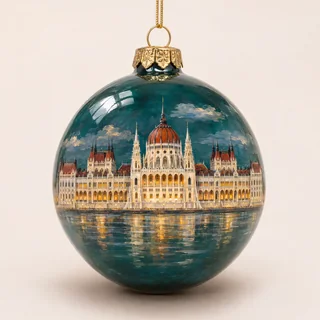
For Hungarians living abroad, an ornament featuring Budapest, a familiar folk-art design or a meaningful Hungarian symbol can become a treasured reminder of home.
These small decorative pieces often carry a significance far beyond their appearance, becoming part of family celebrations year after year.
Thoughtful Gifts Inspired by Hungary
Christmas offers a wonderful opportunity to share a little Hungarian heritage with the people we love.
Whether celebrating family roots or introducing someone to Hungarian culture, there are many meaningful gift possibilities:
- Budapest-inspired Christmas ornaments
- Traditional Hungarian sweets
- Hungarian cookbooks and recipe collections
- Embroidered accessories and folk-art gifts
- Hungarian literature and illustrated books
- Distinctive jewellery and porcelain
- Rubik's Cubes and creative puzzles
The most memorable gifts are not necessarily the most expensive. Often, it is the story behind them that makes them special.
Keeping Hungarian Christmas Traditions Alive
For Hungarian families living around the world, Christmas can be an especially meaningful connection to home.
Baking a family recipe, hanging szaloncukor on the tree, listening to Hungarian Christmas songs or sharing stories with younger generations helps keep these traditions alive.
Even when celebrated far from Hungary, the familiar flavours, decorations and customs can recreate a little of the warmth of a Hungarian Christmas.
Because wherever we celebrate, the true magic of Christmas lies in the memories we share and the traditions we carry forward.
Boldog karácsonyt! — Merry Christmas!
Further Reading
- Visit Hungary — Discover Hungarian culture, seasonal celebrations and festive destinations.
- Budapest Christmas Market — Explore the celebrated Advent market in front of St. Stephen's Basilica.
- Hungarikum Collection — Discover Hungary's distinctive cultural and culinary heritage.
- Taste Hungary — Explore Hungarian gastronomy, traditional dishes and culinary customs.